
By Mahsa Rezaei, Co-founder & Executive Director · Leads FutureOrg Studio
Something quietly shifts when AI moves from a tool people occasionally use to something that does part of the work. A drafting assistant starts checking every intake file. A reporting tool starts preparing the monthly numbers. The work still gets done, but a new question appears: who is responsible for it now?
In most organizations, the structure has not caught up. Job descriptions, team charts and decision rights were written for a workforce made only of people. FutureOrg Studio exists to close that gap.
Why the org chart matters again
When AI takes on part of a role, three things usually go unspoken. Nobody is formally accountable for what the AI produces. The people around it take on new review work that appears in no job description. And roles drift without anyone deciding how they should change. Over time, that creates risk for the organization and quiet exhaustion for staff.
Allocate the work, task by task
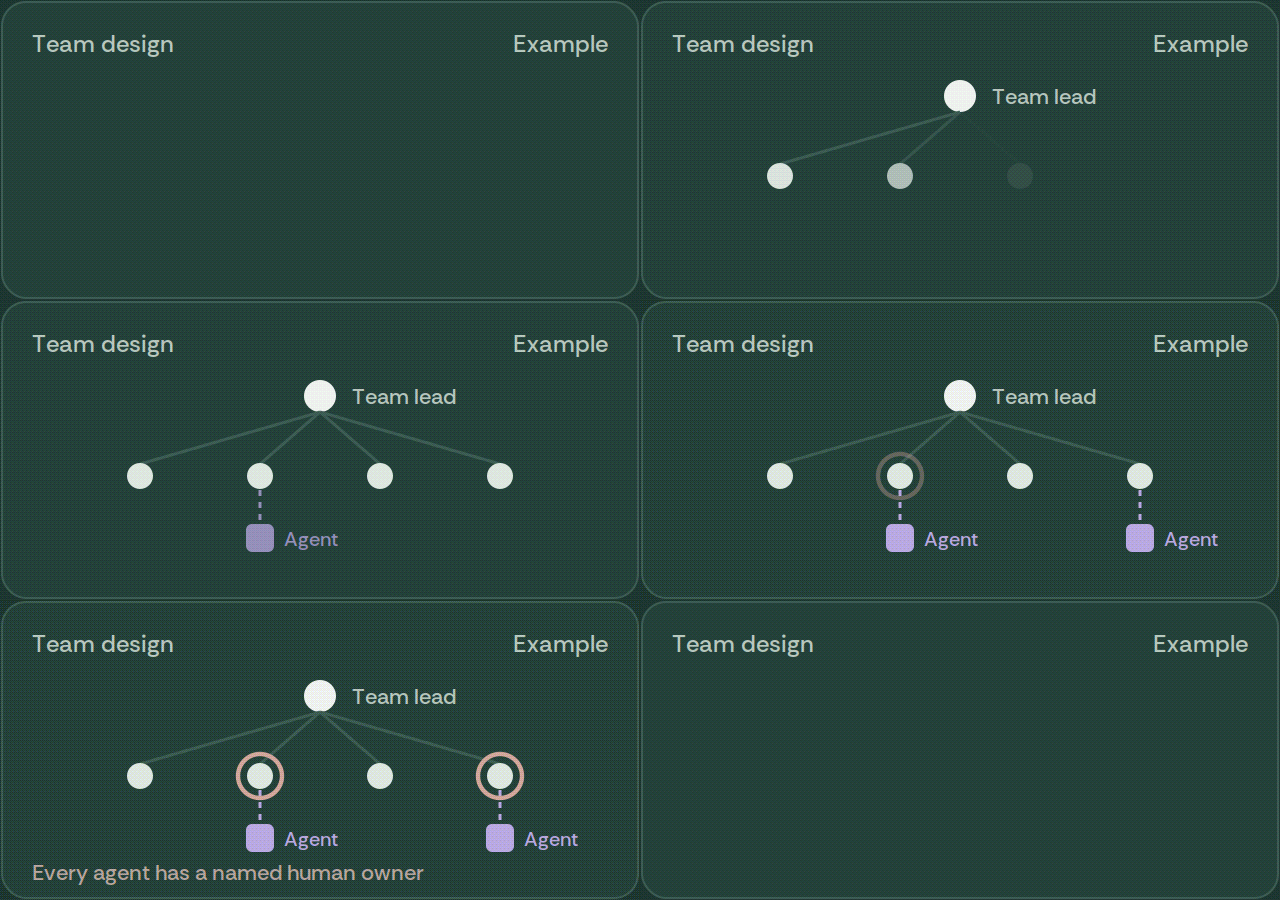
Designing a team for people and AI starts with the work, not the technology. For each task, decide whether it belongs with a person, with AI, or with both, and at what level of autonomy. Some tasks go to AI entirely. Some are shared, with AI preparing and a person deciding. And some stay human by design, because they depend on judgment, relationships or trust.
Every AI tool needs a named human owner
This is the rule we never break. Every AI tool doing real work has a person who owns its output: someone who reviews its work at the agreed level, handles exceptions, and answers for the result. Accountability cannot be delegated to software. Making ownership explicit protects the organization, and it protects the people who would otherwise carry the risk without the recognition.
Role charters make it real
Once the work is allocated, each affected role gets a short charter. An illustrative example: an intake coordinator owns final eligibility decisions, oversees the AI eligibility check at the assisted level, reviews every flagged file before it moves forward, escalates to the program manager, and builds new skills in reviewing AI output and handling exceptions. A charter like this turns a vague shift into a clear, fair role.
Plan the transition
A new structure needs new capabilities, and there are four ways to get them: build them through training, buy them by hiring, borrow them from partners, or hand suitable work to AI. Planning these choices deliberately, with timelines and support, is what keeps change humane. It also shows staff where their roles are heading, rather than leaving them to guess.
Design with people, not for them
The people who do the work understand it best, and they are the ones who will live with the new structure. So we co-design options with the team in working sessions, rather than presenting a finished chart. The goal is roles that bring joy to work rather than drain it: more time for the judgment and relationships that only people can offer.
Where to begin
Start with one team where AI is already doing real work, or about to. List the tasks that have shifted, name an owner for every AI tool, and write one role charter together. One well-designed team becomes the model for the rest of the organization.
Is your structure keeping up with your AI?
In a 20-minute call, we’ll talk through your team and whether a three-week FutureOrg Studio sprint is the right fit.

