2 · Redesign
WorkRedesign Lab
Work, Role & Organizational Redesign · Led by Hossein Tanouri
How should the work change?
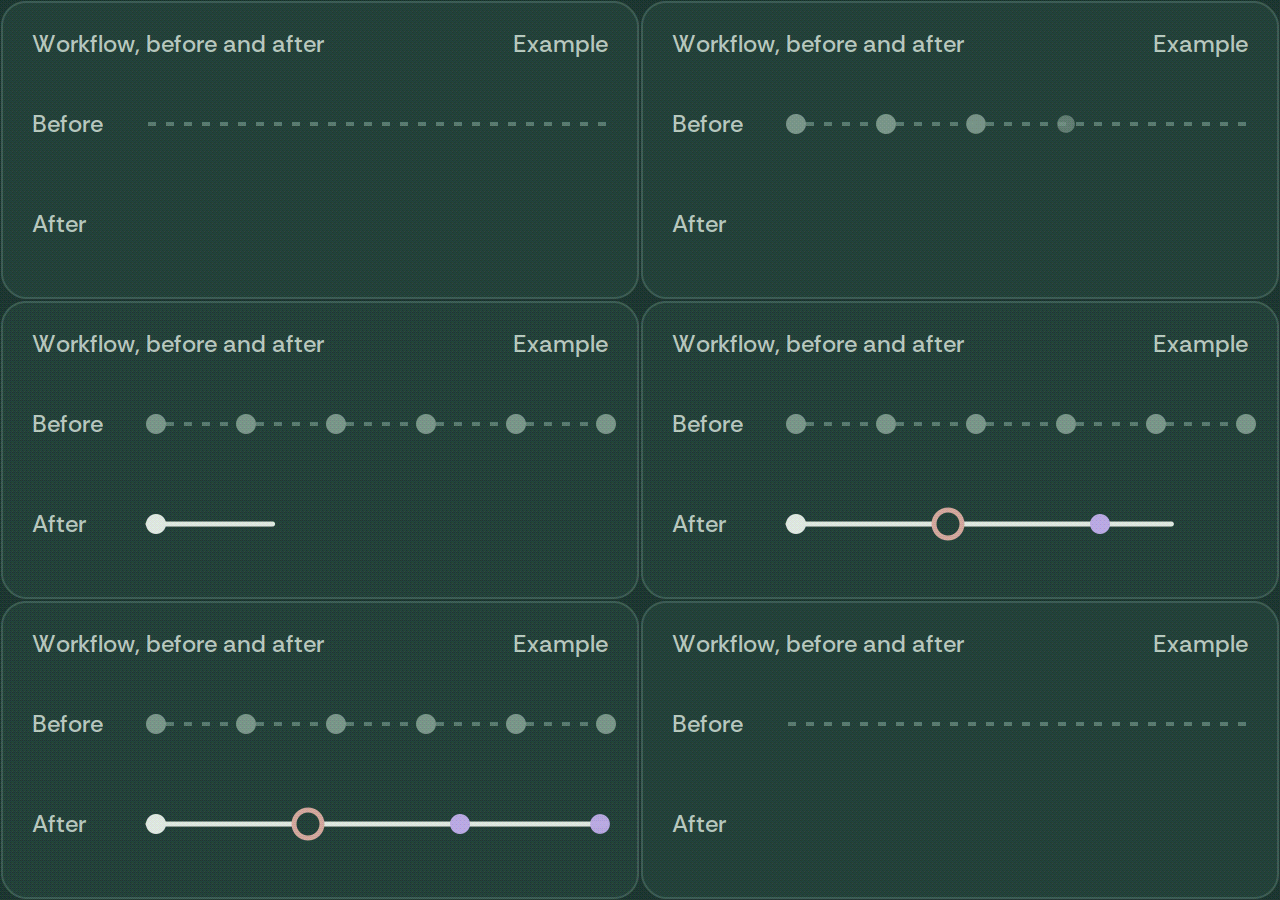
We start with the actual work: tasks, handoffs, exceptions and decisions. In three weeks, one workflow is redesigned with the people who do it, and tried before anything is built.
Who it’s for
- Operations and service-delivery leaders with a workflow that feels harder than it should
- Teams struggling with handoffs, duplicated approvals, rework or unclear ownership
- HR and team leaders who want to know how roles and responsibilities should change
- Organizations that chose a priority in Aati and are ready to redesign it
Eight decisions, one task at a time
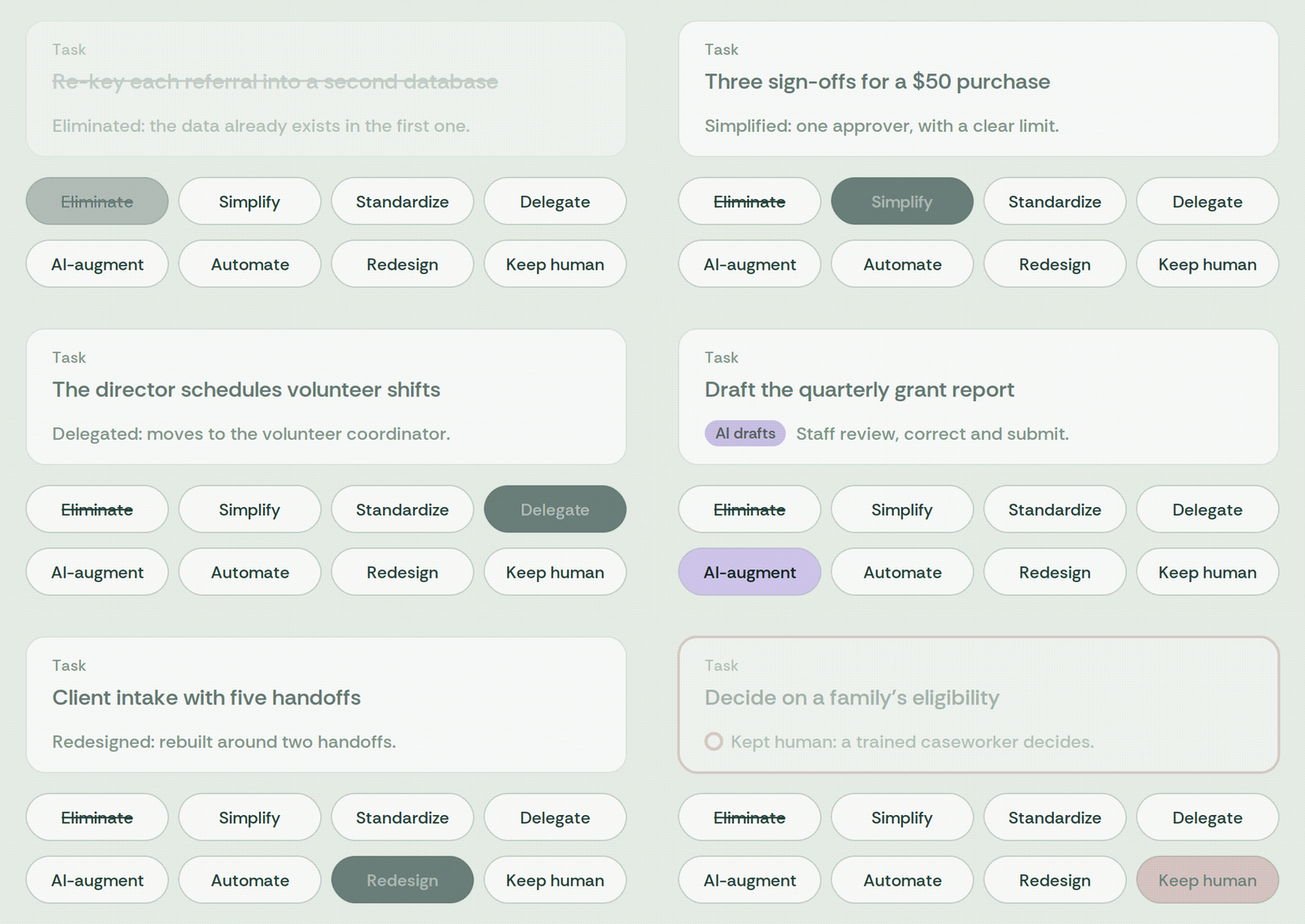
We break the workflow into tasks and decide what should happen to each: eliminate, simplify, standardize, delegate, AI-augment, automate, redesign or keep human.
AI appears in only two of the eight. That is deliberate: this is a structured way to redesign work, not a tool-selection exercise.
Your three weeks
Week 1
Map
We map the current workflow with the people who do it: tasks, handoffs, exceptions, workarounds and decision points.
Week 2
Redesign
We make the eight decisions task by task, then set roles, decision rights, review points and escalation paths.
Week 3
Try
We test the new design with staff in a walkthrough or dry run on real cases, refine it, and agree how it will be adopted.
What you receive
- Current and future-state workflow maps
- A decision for every task, with the reasoning behind it
- Roles, responsibilities, decision rights and escalation paths
- Capability and training implications for the team
- A design that has been tried with staff, and an adoption approach
Responsible by design
- “Keep human” is a deliberate decision, made where judgment and relationships matter
- Review points and escalation paths are written into the new workflow
- The people who do the work are in the room, from mapping to testing
Price
$11,000 + HST for the three-week sprint
Community rate: $8,800 for registered charities and nonprofits with an annual operating budget under $2 million.
Redesign one workflow in three weeks
In 20 minutes, we’ll look at the workflow you have in mind and whether a WorkRedesign Lab sprint is the right fit. Fixed scope, fixed price, three weeks.
Next stage: OpenBuild, put the change to work and prove its value.

